

What Meaning Are You Making? How the Past Shapes the Way We Experience the Present
We do not simply experience the world as it is. We interpret what happens and make meaning from it. That meaning is shaped by our earliest relationships, family scripts, beliefs, values, social position and later experiences. Much of this happens unconsciously.
We all have different relational styles, scripts, beliefs and experiences that filter our perception of the world.
I am from the “children should be seen and not heard” generation. I notice that this old rule can still surface when I feel anxious, encounter authority figures or come under stress. Now that I recognise it, I can breathe through the sensations and feelings that arise, creating enough space to respond from a more grounded and resourceful state.
“Each of us tends to think we see things as they are, that we are objective. But this is not the case. We see the world, not as it is, but as we are–or, as we are conditioned to see it”. —Stephen R. Covey
We are always making meaning
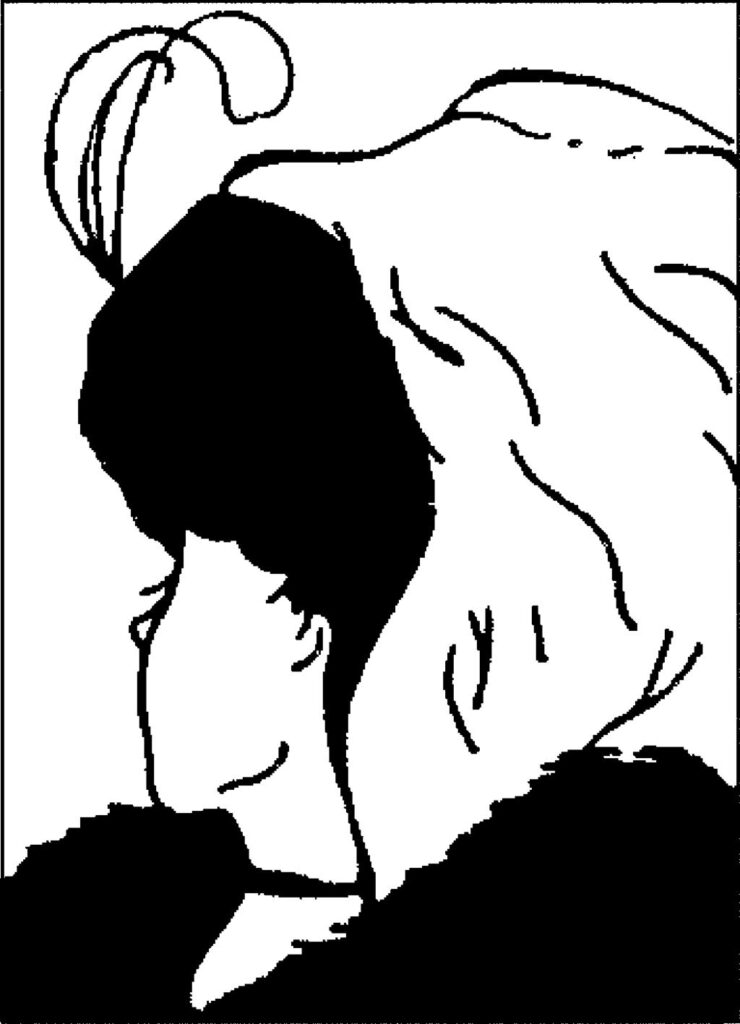
The image on the right, My Wife and My Mother-in-Law, is a famous optical illusion published by the American cartoonist W. E. Hill in 1915.
Optical illusions are excellent examples of how we make meaning. We see a collection of pencil lines, and then our experience—or what we expect to see—fills in the gaps.
When you look at the image, do you see an older woman or a younger woman? Whatever your answer, you are probably fairly certain that you are right.
Can you shift perspective? If you are finding this difficult then look for the younger woman’s choker which doubles as the older woman’s mouth, and the older woman’s chin is the younger woman’s chest.
When a group of people come together, each member will be processing their experience through the many different filters that they have developed through life. Let’s imagine a team or group meeting. If I return to the personal example I gave earlier—the old rule that “children should be seen and not heard”—I can see how it might become activated in a team meeting. If this old rule is activated, I begin to feel uncomfortable and my inner critic finds its voice. I may become hypervigilant, paying close attention to other people’s expressions and tone of voice. As if by magic, I develop the ability to “mind-read.” Alternatively, I may unconsciously slip into an old defence and zone out by dissociating.
Other members of the team will be making their own meaning through their own internal blueprints, shaped by past experience. The same event can therefore produce many different experiences.
The event matters, but so does the meaning made from it.
Looking through the lens of experience
Our experience of the present is filtered through a framework formed mostly in early relationships. As children, we absorb the scripts, values and expectations passed down through generations.
A child may learn:
- Love might be conditional on being helpful or keeping out of the way
- Emotions are not welcome; girls don’t get angry and boys don’t cry.
- Conflict may feel as though it threatens rejection or abandonment. Because children depend upon their caregivers for survival, this can feel profoundly unsafe.
- To be responsible for meeting the needs of others.
- Being noticed is dangerous—or essential.
- Mistakes lead to criticism or shame.
These meanings may once have helped the child maintain safety, approval or belonging. Later, they can become unconscious assumptions about how life and relationships work.
The family we carry with us
Wherever we go, we take something of our internal family landscape with us. I was the eldest and carried the belief that I should know better and that I was responsible for the behaviour of others.
Birth order and the role we occupied within the family can become part of this internal constellation. Were you an only child, the eldest, the middle child or the youngest? Were you expected to be the responsible one, the successful one, the peacemaker, the invisible child or the family rebel?
Once we understand the story we learned to inhabit, we can begin to notice when that old constellation appears in a new environment. With awareness, we have more freedom to choose how we respond.
I am surprised by the number of times my mother, father and three siblings show up in a group. Sometimes I notice a thought belonging to a much younger self or the need to show up in a certain way.
The important nuance is that family scripts are not necessarily spoken explicitly. They may be conveyed through approval, disapproval, silence, role allocation and what the family permits—or cannot tolerate. Then there are the “crumple buttons”: perhaps a particular gesture, look or tone of voice that causes us to crumple inside. Detected unconsciously, it can trigger shame, feelings of worthlessness or fears of abandonment—and throw us completely off course.
What is your childhood story? The more deeply we understand ourselves, the better equipped we are to notice and navigate the experiences that might activate our old defences.
Meaning is shaped by more than the family
As the saying goes, a fish does not know it is in water. The environment in which we swim is made up of wider forces extending beyond the individual and their family. We are shaped within families, but families themselves exist within social and historical contexts.
Our meaning making is also influenced by:
- culture and religion;
- gender, race and social class;
- education and work;
- community expectations;
- experiences of privilege, exclusion or discrimination;
- wider social ideas about success, ageing, authority and relationships.
These factors influence our unconscious biases—another example of meanings and assumptions operating outside our awareness.
What else might be going on?
When we feel disproportionately anxious, ashamed, defensive or compelled to please, we might ask ourselves:
- What meaning am I giving to what has happened?
- What am I assuming about myself or the other person?
- Where might I have learned this?
- Is this belief still true—or merely familiar?
- What else might be going on?
- What becomes possible if I understand this differently?
Returning to the meeting, I notice myself reclining and perhaps shrinking into my chair. Something—an action, a word or a tone of voice—has activated my flight response. My breathing becomes shallow, my shoulders tense and I feel a sinking sensation in my abdomen. My inner critic becomes active and cruel. I recognise that I have slipped into a much younger state.
I take a deep breath followed by a long, soothing out-breath and ask myself what is happening. I turn towards the younger part of myself with compassion and remind her that I am here to look after her now. As my body settles, I return my attention to the meeting.
Learning more about ourselves through therapy and coaching can throw light on what has previously been hidden from view.
Awareness creates choice
Our patterns make sense when understood within the relationships, family systems and wider world that shaped us—but they need not determine what comes next.
By paying attention to my inner world, I increase the space between stimulus and response. Within that space, I am better able to think clearly and respond from my grounded adult self.
With growing awareness comes choice.
The legacy of earlier experiences can quietly restrict how freely we respond to life. When the meanings beneath our familiar patterns become visible, we are no longer quite so governed by them. We may begin to make new meanings—and choose different ways of responding.
If this resonates with you, you are welcome to contact me to arrange a free consultation and explore whether psychotherapy or developmental coaching might be helpful.
Jacqueline Davis is a UKCP-registered psychotherapist and executive coach with more than 30 years’ experience encompassing organisational leadership, consultancy, governance and executive coaching.
Igniting Minds
jacqueline@ignitingminds.org.uk
www.ignitingminds.org.uk
Covey, S. R. (2004). The 7 Habits of Highly Effective People. London: Simon & Schuster, p. 28.